
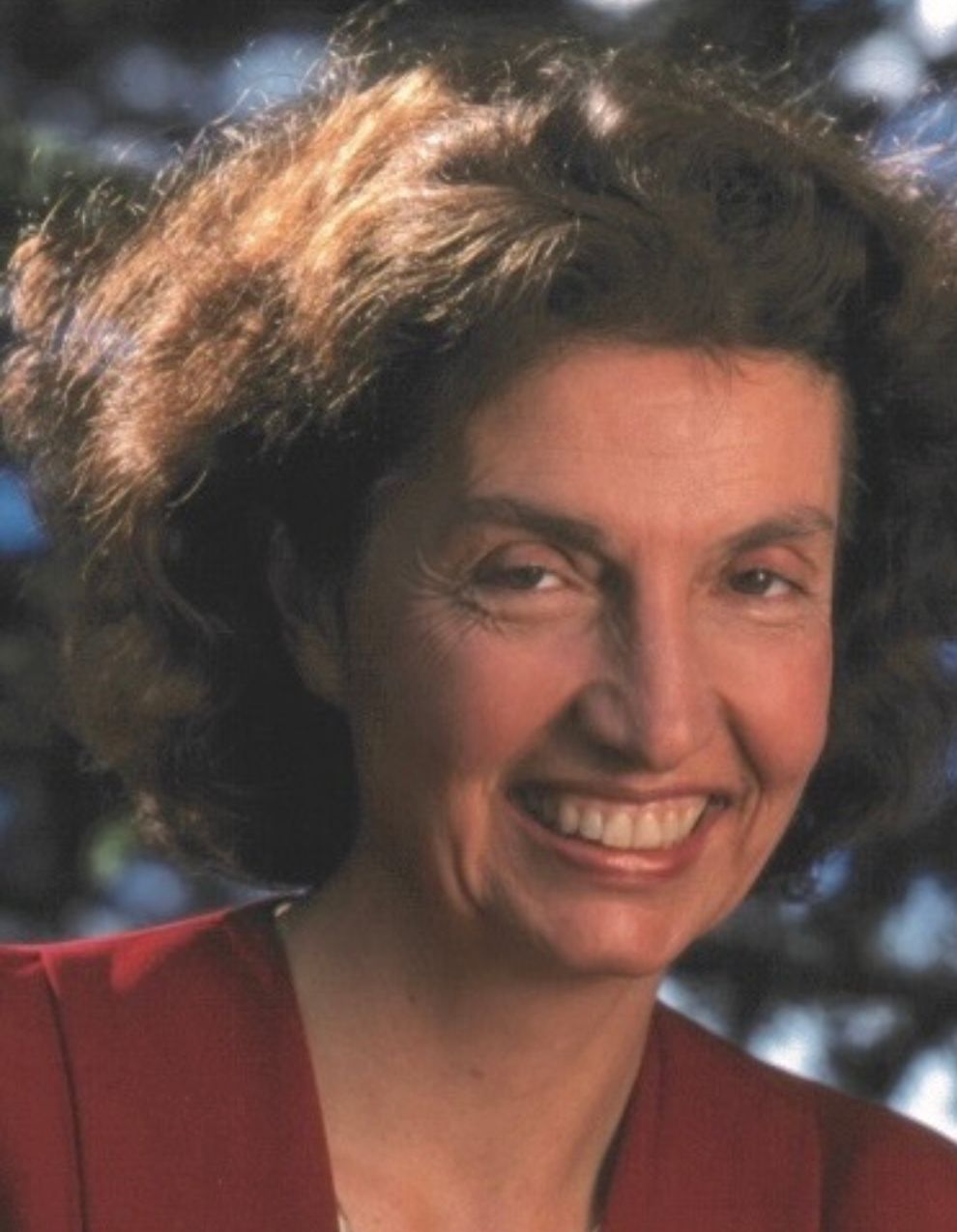
DEBORAH Lee WILLIAMS
• Government
Inducted: 2026
DEBORAH Lee WILLIAMS
In 1963, Connie Taylor drove her 1954 Ford to Alaska from California and never looked back. After moving to Cordova in 1966, she demonstrated her indomitable “can-do” spirit by becoming the first female seine boat captain in Prince William Sound. During her 19-year fishing career, she also served on the boards of many fishing-related organizations, working on foundational fishing issues. Her example helped pave the way for other women to commercial fish in addition to contributing their expertise to those organizations.
Always civic-minded, Taylor was a long-time President of the Cordova Chamber of Commerce and was twice elected to the Cordova City Council. To ensure transparency of council deliberations, she insisted that Alaska’s Open Meetings Act be followed. When the Act was violated, her resulting lawsuit helped define statutory boundaries for local governments to protect the public’s interest. She also helped ensure that small businesses in Cordova were compensated following the 1989 Exxon Valdez Oil Spill.
In 1979, Taylor purchased a printing press, the Nexus, for a successful printing and publishing business. Many of the 70 books she has published thus far feature Alaskan stories and themes, helping preserve Alaska’s history as well as giving voice to the authors. At age 76, she became a published author herself with her first children’s book followed by two more, plus a variety of published poems and photographs.
Her passion for community service began another chapter at age 79, when she volunteered to lead a variety of writing classes with OLÉ! Anchorage, which provides opportunities for lifelong education. With Taylor’s encouragement, class members developed writing skills, tried new writing forms, and found success submitting their writing, photos, and illustrations for publication. A long-time member of the Benton Bay Athletic Lions Club, Connie Taylor continues to support the Lions’ mission of service.
Extended Bio
Utilizing her law and advocacy skills, together with her government and non-profit experience, Deborah Williams helped accomplish a multitude of significant and lasting positive changes to the State. Over the course of more than four decades, Williams worked collaboratively with remarkable Alaskan women (and men) to achieve a healthier Alaska, a more thriving environment, enhanced communities, and generationally-positive foundations for Alaska’s future.
Born in Los Angeles in 1954 to two loving parents — Jeanne S. Williams and E. Deming Williams — Deborah grew up in Van Nuys California, a community with very strong public schools, but also severe air pollution. Living frugally because of her parents’ Depression Era roots, the family conserved money and resources wherever they could, and spent their vacations on low-cost trips exploring public lands and waters. Williams came to cherish the physical, mental, relationship, spiritual, ecosystem services, and wilderness benefits from our shared, protected natural heritage.
Other formative experiences for Williams included seeing her grandfather die a slow, agonizing death from heavy smoking-related emphysema; and working closely and successfully with highly capable, young peers on many productive projects, from numerous environmental initiatives at Birmingham High School to the founding of the Harvard Environmental Law Review.
Starting in kindergarten with Mrs. Stewart at Stagg Street Elementary, Williams was inspired by a multitude of teachers and youth-group leaders who understood and practiced the principles of positive youth development. For those who did not, and for the other significant challenges that she faced, Williams could hear her parents saying: “The only difference between a stumbling block and a steppingstone is the way you use it.”
In the early ‘70’s, Williams vacationed in Alaska with her parents in the family’s old Ford Country Squire station wagon, taking the ferry from Prince Rupert to Haines, driving virtually all of the highways in the state and returning on the unpaved Alcan Highway. It was love at first sight, re-enforced by meeting so many wonderful Alaskans. Her heart and mind declared “Alaska is my home.” After spending two summers in Alaska clerking for a private law firm (originally Matthews, Dunn and Baily), Williams served as an attorney in the Department of Interior’s Solicitor’s Honor’s program in Washington DC. Upon completing the program, Williams asked for, and was ultimately granted, a transfer to the Alaska Regional Solicitor’s Office to represent the National Park Service and the US Fish and Wildlife Service. Thus began her full-time life in and commitment to Alaska.
Filled with opportunity, Alaska was the ideal place to be a young woman professional, and active member of Commissions, Boards, and civic groups. So many remarkable women, who are now alumnae of the Alaska Women’s Hall of Fame, were inspirational trail-blazers and critically important colleagues of Williams’s in the areas of the environment, education, health, law, community and equality, including (but certainly not limited to): Jane Angvik, Eleanor Andrews, Kay Brown, Judy Caminer, Carol Comeau, Carolyn Covington, Betye Davis, Lanie Fleischer, Heather Flynn, April Ferguson, Abbe Hensley, Celia Hunter, Sarah James, Katie John, Jewel Jones, Janet McCabe, Sharon Richards, Susan Ruddy, Tay Thomas, Peg Tileston, Sheila Toomey, Fran Ulmer, and Ginny Wood. Alaska women supporting other Alaska women has been such a special, ingrained and crucial part of the Alaska ethic and Williams’s journey.
A Healthier Alaska
In the early 1980’s, when Williams moved to Anchorage, the city had a serious winter air pollution problem, negatively impacting people’s health, especially the elderly, the infirm, and the young. As the Chair of the Anchorage Environmental Quality Health Committee, Vice-Chair and Member of the Anchorage Municipal Health Commission, Member of the State Implementation Plan on Particulates Committee and more, Williams worked strategically with others on achieving and implementing successful plans to substantially reduce Anchorage’s carbon monoxide and small particulate pollution, which in turn, resulted in compliance with the Clean Air Act and helped protect the health of residents and visitors alike. These gains have persisted over time. Williams also worked with Senator Ted Stevens on legislation that resulted in the first national smoking ban legislation in airplanes.
Committed to all aspects of lung health, as the Executive Director of the Alaska Lung Association (the name of which later changed to the American Lung Association of Alaska), Williams planned and was instrumental in achieving the first major laws restricting tobacco use and second-hand smoke in Alaska. Working with Senator Jan Faiks and others, Williams led and coordinated numerous campaigns that resulted in raising the age for purchasing cigarettes, restricting youth access to tobacco products from vending machines, creating and expanding public smoke-free areas, increasing tobacco taxes to raise money for smoking cessation programs, and much more. These legislative and regulatory changes applied to and positively impacted the entire State, especially Alaska youth, the elderly, and people with chronic diseases. She also helped launch highly effective lung health education and support campaigns, such as the Better Breathers Club, for adults with Chronic Obstructive Pulmonary Diseases (COPD) and brought prominent people like Iditarod Champion, Libby Riddles, and the acclaimed runner, Jim Ryan, to numerous high schools in Fairbanks, Anchorage, and the Matanuska Valley to talk with youth about reasons not to smoke, and in Jim Ryan’s case – because he was the first American to run a mile under 4 minutes – how you could thrive with asthma. One of Williams’s many precedent-setting initiatives was teaming up with Mr. Whitekeys and his Fly by Night Club to offer the first smoke-free performance in a nightclub in Alaska, a successful precedent that was followed by other businesses. Working effectively with the press, Williams made sure that these legislative and programmatic accomplishments were shared statewide through the media to inform and inspire other Alaskans. The Alaska Lung Association thrived under Williams’s leadership as Executive Director, including: increasing the volunteer base by over 500 percent, increasing the income of the organization by over 60 percent, and expanding the number and scope of programs statewide. To achieve these meaningful gains for Alaska, Williams collaborated impactfully with government, businesses (including oil companies, banks, utilities, and the health sector), other non-profits, and the public.
As Director of Anchorage Youth Development Coalition (AYDC), Williams, together with her staff and Board, helped create and promote programs to reduce youth substance use and other harmful behaviors, while using positive youth development strategies for building youth strengths and resilience. Her work was recognized nationally with the prestigious National Advocate of the Year Award from the Community Anti-Drug Coalitions of America. Fully committed to youth, during her tenure as Director, when the United Way was no longer able to serve as fiscal agent for AYDC, Williams identified and effectively led the AYDC Board of Directors through the transition to Safe Alaskans, where AYDC is thriving today. As in her other Director positions, Williams increased AYDC’s funding, number of programs, visibility, number of volunteers, and more.
A Thriving Environment
Based on her research and lived experience, Williams understood that Alaska’s natural and cultural environments were critically important not only to Alaskans’ mental, spiritual and physical health, but also to multiple sustainable components of the State’s economy, including: tourism; subsistence, commercial and sports fishing; subsistence, guided and sports hunting; and the quality-of-life economy. As a result, she has devoted most of her life to protecting Alaska’s unparalleled lands, waters, and intact ecosystems. Some of her lasting contributions include:
● Working with the National Park Service to write and promulgate the first set of regulations to protect humpback whales in Glacier Bay National Park, one of the first such set of rules in the world. These regulations played a significant role in the increased number of humpback whales in Glacier Bay National Park and Icy Strait; namely, 41 in 1985 to 239 in 2013.
● Protecting lands impacted by the Exxon Valdez Oil Spill. As one of six trustees on the Exxon Valdez Oil Spill Trustee Council (Trustee Council), Williams represented the U.S. Department of Interior (DOI), where she thoughtfully and strategically promoted restoration throughout the region negatively affected by the oil spill. Working closely with other trustees and the Executive Director, Molly McCammon, Williams worked diligently to achieve restoration through the acquisition of lands and interests in lands that were facing development or other threats, helping to protect over 600,000 acres of land. This resulted in the permanent expansion of State and National public lands such as the Kodiak National Wildlife Refuge, Shuyak Island State Park, Afognak Island State Park, Chugach National Forest, Kenai Fjords National Park, Alaska Maritime National Wildlife Refuge, Kenai National Wildlife Refuge, and Kachemak Bay State Park. It also safeguarded into perpetuity, crucial salmon streams and rivers, seabird and other wildlife habitat, expanded subsistence opportunities, and coastal ecosystems important for fisheries, endangered and threatened species, tourism, and recreation.
While serving as the Special Assistant to the Secretary of the Interior for Alaska (Special Assistant), Williams served as the “eyes and ears” of the Secretary. Traveling throughout the State, Williams worked extensively with rural communities, tribes, and Native Corporations. Coordinating among DOI bureaus and offices, Williams helped achieve changes to promote cultural and other important goals. One example involved the harvesting of red fish (late-stage sockeye salmon) in Katmai National Park. After being asked by Alaska Native leader, Trefon Angasan, Jr., to support traditional harvesting of red fish within the Park, Williams worked with the National Park Service and the Alaska Congressional delegation to help pass in 1966, a specific provision to allow local residents who are descendants of Katmai inhabitants to harvest those fish. Another example was responding to and working with Yupik leaders in the Yukon-Kuskokwim Delta to reduce the number of harassed, culturally significant brown bears. This was accomplished by achieving changes in field practices through the Director of the U.S. Fish and Wildlife Service. Working closely with Native leaders statewide, Williams also impactfully promoted subsistence rights and tribal engagement.
Williams helped address many other issues including a win-win land exchange with the Kenai Native Association. This provided the Association with lands important to them in exchange for lands valuable to the U.S. Fish and Wildlife Service, especially the protection of Lake Todatonten. Moreover, while representing the US Government on the Trans-Alaska Pipeline Liability (TAPL) Fund Board, Williams worked successfully with nine other Trustees, including Morris Thompson from Doyon, a state representative and seven oil company executives to bring TAPL to a successful conclusion after resolving all claims, and returning the remaining money to the State of Alaska and the Oil Spill Liability Trust Fund (a federal fund).
Believing in the importance of building bridges, Williams sought partnerships where possible. This includes her collaborative efforts as Special Assistant with then Lieutenant Governor of Alaska, Fran Ulmer, along with then Alaska Federation of Natives President, Julie Kitka, through the creation and implementation of the Alaska Land Managers Forum. This tri-chair structure was not common at the time. Through regularly scheduled meetings, the Forum brought together the Directors of all the Alaska-based land management agencies and bureaus, raised shared issues and concerns, and emphasized communication and cooperation in addressing them. It created a regular, structured dialogue across and among land managers that allowed issues to be surfaced before they escalated. Williams also empowered the critical work being done at the DOI bureau and office level to protect the environment, such as then DOI’s Regional Environmental Assistant for Alaska, Pamela Bergmann’s work to create guidelines (which became national policy) for protecting historic properties following an oil spill.
In her capacity as the Executive Director of the Alaska Conservation Foundation (ACF), Williams helped achieve many additional enduring contributions to Alaska, while at the same time, significantly strengthening the organization. With respect to the latter, during her tenure, working with the Board and staff, Williams doubled the ACF budget by several million dollars and more than doubled the number of ACF employees. The growth, program quality, and financial integrity of ACF consistently achieved a 4-Star rating (the highest possible) by Charity Navigator as well as being named by Readers Digest as “One of the 12 Best Charities in the Nation.” In addition to starting the ACF Internship Program (discussed below), Williams also initiated the ACF Lifetime Achievement Awards (starting with Celia Hunter and Ginny Wood from Fairbanks), which are considered the highest conservation awards in Alaska. In turn, these awards elevated and increased the visibility of the remarkable contributions of Alaska conservationists throughout the State. Also, through ACF funding, consultation, and finding other funders, Williams helped establish important programs, which she then fledged into important Alaska organizations that have made long-lasting and positive statewide contributions. One example is her work with Chris Rose, and the incubation and fledging of REAP, the Renewable Energy Alaska Program (REAP).
Williams has also made many lasting contributions as a communicator about conservation. Examples include:
● Law Review articles such as: “ANILCA: A Different Framework for Managing the Extraordinary National Park Units of the Last Frontier,” 74 Denver University Law Review 859 (1997).
● Magazine and Newsletter articles such as: “Policies of Change: Adapting to a Warming Arctic,” Dialogue Earth, November 19, 2007; “Guest Opinion: Defending Alaska, Defenders Magazine (Spring 2003). Furthermore, she was on the cover of both We Alaskans (“The Interior World of Deborah Williams” (May 1997)) and Alaska Business Monthly (“A Leading Lady of Conservation” (July 2001)).
● Forwards to books such as: Rivers of Life by Robert Glen Ketchum, Aperture (2001); Wood-Tikchik by Robert Glen Ketchum, Aperture (2003); and Alaska’s Brooks Range, The Ultimate Mountains by John M. Kauffman, The Mountaineers Books, Second Edition (2005).
● Journal Articles and Proceedings such as: Williams and Benz, “Making Global Warming Solutions Locally Relevant and Accessible, “Hearthstone Vol 6, Num 1 (2005)” and in Proceedings such as “Wilderness Insights from Alaska: Past, Present and Future”, Martin and Kormos (ed), Wilderness, Wildlands, and People; Proceedings of the 8th World Wilderness Congress, Fulcrum Publishing (2007).
● Over 40 Op-eds published in the Anchorage Daily News, Anchorage Times, Los Angeles Times, Seattle Times, The Hill, and other newspapers, as well as Letters to the Editor in the Washington Post and elsewhere. Op-ed examples include: “Feeling the Heat: Global Warming in Alaska” Indian Country News (4/20/05) and “The National Imperative to Achieve 30 by 30,” The Hill (5/21/21).
● Book chapters such as in: Softly on This Earth, Trafford Publishing (2004).
In addition, Williams has been thanked in the acknowledgment sections of numerous books, including Elizabeth Kolbert’s critically acclaimed, groundbreaking book: Field Notes from a Catastrophe: Man, Nature and Climate Change.
Furthermore, Williams has presented over 200 speeches about Alaska, including featured and plenary presentations at, for example, The Wildlife Society Annual Meeting, the World Wilderness Congress, and the National TrailLink Conference; and served as emcee at many major events including the three-day, 25th Anniversary of the Alaska National Interest Lands Conservation Act Conference (which she spearheaded and also introduced President Jimmy Carter) and two national rallies on the West Lawn of the U.S. Capitol.
Williams has testified before Congress multiple times, including: “Towards a Clean Energy Future: Energy Policy and Climate Change on Public Lands,” House Subcommittee on Energy and Minerals (3/20/07) and “On Thin Ice: The Future of the Polar Bear,” House Select Committee on Energy Independence and Global Warming (1/17/08).
For decades, Williams has been quoted frequently in local, state, national, and international press, including the New York Times; Washington Post; BBC; press in Finland, Japan, Korea, and France; San Francisco Chronicle; Anchorage Daily News; Arctic Sounder; CBS Evening News; National Public Radio; and 60 Minutes.
Enhanced Communities
Throughout her life, Williams has been involved in helping lead efforts that enhance the communities in which she has lived. Two examples in Anchorage that have resulted in lasting positive changes include “The Light Speed Planet Walk” and the “Four-Way Forest.”
● Light Speed Planet Walk. An active volunteer member of the Downtown Rotary Club for many years, Williams co-chaired with Jean Hellenthal, the Rotary Club’s 100th Anniversary project; namely, the “Anchorage Light Speed Planet Walk.” The acclaimed walk enables participants to experience the relative size of the planets and their distance from the Sun. Collaborating with Anchorage High School Student, Eli Menaker, Williams helped lead the effort, raised money for the project, motivated scores of Rotarians to engage in it, and launched the project with a community celebration. The walk has continued to be enjoyed by residents and visitors alike.
● Four-Way Forest. Wishing to beautify portions of 4th and 5th Avenues in Anchorage, while also enhancing air quality and publicly sharing the Rotary’s ethical standards for personal and business interactions, Williams co-led the “Four-Way Forest” project. Working with the project committee, Williams raised the funds for and helped design and implement the planting of numerous trees and plants on 4th and 5th Avenues. The associated signage sets forth the Rotary Four-Way Test, which asks four key questions: (1) Is it the TRUTH?, (2) Is it FAIR to all concerned?, (3) Will it build GOODWILL and BETTER FRIENDSHIPS?, and (4) Will it be BENEFICIAL to all concerned?
In her position as Special Assistant to the Secretary of the Interior for Alaska (Special Assistant), Williams actively advanced numerous capital construction projects that have served to enhance, and benefit, Alaska communities. For example, on behalf of the U.S. Department of Interior (DOI), she supported funding the construction of the Alaska Sealife Center by the Exxon Valdez Oil Spill Trustee Council and oversaw the related National Historic Preservation Act compliance work to ensure it was completed expeditiously. Williams’s contributions were acknowledged when she was honored to break ground with a ceremonial shovel at the beginning of the project and help cut the ribbon at the conclusion of the Center’s construction.
Another effort that Williams was instrumental in during her tenure as Special Assistant was the creation of ARLIS, the Alaska Resources Library and Information Services at the University of Alaska Anchorage. At that time, most DOI bureaus (including the National Park Service, U.S. Fish and Wildlife Service, U.S. Geological Survey, and Minerals Management Service) had separate libraries, all with important documents. However, with their increasingly reduced budgets, they were not able to adequately maintain their collections nor make them readily available. Under Deborah’s co-leadership, it was decided to merge the DOI bureau libraries in addition to collections held by the U.S. Forest Service, Alaska Department of Fish and Game, and Alaska Department of Natural Resources to create ARLIS in 1997. Focusing on Alaska’s natural and cultural resources, ARLIS continues to serve a diverse audience, including agency personnel, university faculty, students, and researchers. In recognition of her critical role in creating ARLIS, Deborah, along with key librarians, received the Golden Hammer Award from then Vice President Al Gore.
Williams also strongly supported public radio and could be heard for three decades doing on-air fund-raising pitches for KSKA, typically with Bede Trantina. When she was Special Assistant, Williams also self-funded on behalf of DOI employees in Alaska, an annual sponsorship to benefit KSKA, which was read on-air multiple times a week. In addition, Williams was a frequent guest on public radio programs like Steve Heimel’s “Talk of Alaska” and “Thad Woodard’s “Line One Your Health Connection.” When she traveled to communities throughout Alaska, Williams would often be interviewed by the local public radio station, and because she believes in the power of information and communication, she would always make herself available for their talk shows or news programming.
Additional Positive Foundations for Alaska’s Future
– Achieving Competition in Telecommunications within Alaska. When Williams was the Director of the Alaska Consumer Advocacy Program (ACAP) in the early 1980s, she worked to keep utility rates transparent and equitable throughout Alaska, including in smaller communities like McGrath. The key, Williams realized, was informing and engaging the public. To help achieve this goal, Williams not only traveled to multiple communities, but she also wrote a widely-distributed guide entitled “Consumer Utility Handbook.” The knowledge she gained about utilities at ACAP was instrumental to her work with GCI, as their lead outside counsel, to achieve statewide competition for long-distance calling. Working with Ron Duncan and Dana Tindall, Williams designed and executed the legal strategies for (1) defending a ballot initiative for competition against legal challenges; (2) negotiating competition legislation that passed the legislature and was signed into law by Governor Cowper; (3) leading GCI’s extensive and successful regulatory efforts to design and structure a new, competitive system before the Alaska Public Utilities Commission; and (4) stopping challenges to the newly structured system. Going from a monopoly-based system to a competitive system has resulted in statewide benefits in price and innovation.
Empowering Youth. For decades, Williams has strongly supported empowering Alaska youth. Among other long-lasting contributions, she worked on securing critical funding and programmatic guidance and assistance for Alaska Youth for Environmental Action (AYEA). This program seeks to empower youth from throughout the State, with an important focus on rural Alaska, as well as the larger cities. When Williams was the Executive Director of the Alaska Conservation Foundation (ACF), she helped AYEA and then Director, Polly Carr, secure their first major grant, which funded AYEA for three years and enabled AYEA to develop strong roots for its future. Subsequently, collaborating with youth advocates, Williams sponsored many successful fundraising events in the yard of her home, helped with all other aspects of fundraising, attended and spoke at many AYEA youth summits, mentored AYEA youth, and provided advice to AYEA Directors.
Furthermore, as ACF Executive Director, Williams led the creation of the ACF Summer Internship Program, secured its endowed funding base through the establishment of the Celia Hunter Fund, secured additional funding for the Program from other creative strategies, and helped define the Program. As a result, this Program has placed over 300 college students from both Alaska and the Lower 48 into conservation organizations throughout the State. Many former interns from the Lower 48 became Alaska residents; all became Alaska Ambassadors.
Finally, as a mother of her beloved son, Andrew Roy, Williams was very involved in supporting him, the schools he attended (Inlet View, Romig, and West) as well as adjacent schools. Whether it was coming to his class and assisting the teachers, helping out at track events, participating in fundraisers, or tutoring other students in math (which was part of the United Way/Downtown Rotary’s “90 by 2020” initiative that Williams helped implement), Williams was there to help build the next generation of Alaskans.
According to Williams, none of this work would have happened without her family, friends and colleagues, and the inspiration she received from the remarkable Alaska women who came before her.
Despite moving to California due to serious family medical issues, Williams continued to stay engaged in important Alaska issues, visited Alaska whenever possible, and initiated nationwide efforts such as “Americans for Alaska,” while also inspiring her students at the University of California, Santa Barbara about Alaska. Always encouraging people she meets to visit Alaska, the State is forever rooted in Williams’s heart and activities.
Education and training:
● Birmingham High School, Van Nuys, CA (1968-1971); Graduated First in a Class of 1,000; Founder and President of the school’s Ecology Club.
● Pomona College, Claremont, CA (1971-1975); Graduated Summa Cum Laude and Phi Beta Kappa; Awarded Ada May Fitts Prize and Graduate School Scholarship (for outstanding intellectual leadership and influence on other students); Biology-Economics Major (Special Concentration); Member of the Commission on the Education of Women
● Harvard Law School, Cambridge, MA (1975-1978); Graduated Cum Laude; Co-Founder of the Harvard Environmental Law Review; Co-Editor-in-Chief of the Harvard Environmental Law Review; Thesis on Benefit-Cost Analyses (subsequently published).
Community Involvement: Representative Community Involvement includes:
● Member of Rotary International (Downtown Anchorage Club) (1988-1990; 1999-2016), Co-Chaired numerous major, successful community projects including: “The Planet Walk” and “The Four-Way Forest” projects; and “The 90 x 20 Initiative” (90 percent high school graduation by 2020).
● Advisory Board Member, Pacific Environment (2011-Present).
● Advisor, Committee Member and Fund Raiser for Alaska Youth for Environmental Action (2004-present).
● Member of the Board of Directors of Greenstar (2007- 2011).
● Member and Former Chair of the Anchorage Environmental Quality Committee (1980-1994).
● Member of the Air Quality Technical Advisory Committee of AMATS (Anchorage Metropolitan Area Transportation Study Committee) (1986-1989).
● Member of the State Implementation Plan on Particulates Committee (1986-1989).
● Board Member and President of the Board of Directors of Trustees for Alaska (1982-1986).
● Vice-Chair and Member of the Anchorage Municipal Health Commission (1981-1985).
Honors/Awards Received – Representative Honors/Awards include:
● Alaska Woman of Achievement Award (2012).
● Community Anti-Drug Coalitions of America National Advocate of the Year Award (2014).
● Rotarian of the Year Award, Anchorage Rotary (2013).
● The Murie Award for Outstanding Professional Contributions to Conservation (2010)
● Spirit of Defenders Award for Public Education, Defenders of Wildlife (2007) (First recipient of this National Award).
● The Ginny Hill Award, Alaska Wilderness Recreation & Tourism Association (2004).
Recipient of Two “Hammer Awards” from Vice President for Government Innovation (1996-1999) National Partnership for Reinventing Government.
● Special Commendation from the Secretary of the Interior (1980).
Document information (Reference books, periodicals, websites, etc.):
● Williams, “Benefit-Cost Analysis in Natural Resources Decision-making: An Economic and Legal Overview,” Natural Resources Lawyer 11 (1978): 761.
● Swift and Williams, “Emergency Interim Rules for Twelve Newly Created National Wildlife Refuges in Alaska,” 45 Fed. Reg. 14192 (May 15, 1980).
● Williams, et al, “Protection of Humpback Whales Within Glacier Bay National Monument,” 45 Fed. Reg. 32228 (May 15, 1980).
● Williams, Alaska Consumer Advocacy Program’s Consumer Utility Handbook (1981).
● Bradley and Williams, “Be it Enacted By The People of The State Of Alaska… A Practitioner’s Guide to Alaska’s Initiative Law,” IX Alaska Law Review 279 (1992).
● Williams, “Alaska: A Landscape of Hope”, 6 Heartstone 51 (Spring 2005).
● Williams, “Impacts of Global Warming in Alaska”, Encyclopedia of Earth (2007).
● Williams, numerous published interviews and cover stories, including: “Conservationist sounds alarm on global warming, Deborah Williams presses Alaskans to lead battle against global warming,” Anchorage Daily News (6/20/06); “Deborah Williams: Leading Alaska’s Environmental Movement” (Cover Story Alaska Business Monthly, 7/1/01); “Mercury Rising,” Harvard Law Bulletin (Summer 2008).
Selected References
Magazine profiles
Cover Story: “The Interior World of Deborah Williams,” We Alaskans Magazine, May 4, 1997, by Charles Wohlforth, pp 4 –7 and 13-14.
Cover Story: “A Leading Lady of Conservation (Deborah Williams: Leading Alaska’s Environmental Movement.),” Alaska Business Monthly, July 2001, by Roger Kane, pp 72-73.
“Alaska’s Landlord,” Harvard Law Bulletin, by Linda Grant, Fall 1997, p. 22.
“Mercury Rising,” by Bill Ibelle, Harvard Law Bulletin, Summer 2008, July 28, 2008, https://hls.harvard.edu/today/mercury-rising/
VIPs Seek the Experience and Spirit of Arctic Refuge Wilderness, by Roger Kaye, International Journal of Wilderness, Volume 2, number 1, May 1996, pp. 31-
“Alaskans Say Goodbye and Pay Tribute to Deborah Williams Upon Her Resignation as Special Assistant to Secretary of the Interior,” Sierra Borealis November/December 1998, p. 9.
“25 Years of HELR: The Invention and Reinvention of Environmental Law,” by Bonnie Docherty, Harvard Environmental Law Review, Volume 25, pp 323-328.
Newspaper features and articles
1. “Turning up the heat,” by Kate Cheney Davidson, Anchorage Daily News, June 20, 2006, pp. D1 and D4.
2. “The Great Outdoors: Environmental studies lecturer creates an online resource for exploring local public lands,” by Harrison Tasoff, The Current, August 13, 2020 (https://news.ucsb.edu/2020/019993/great-outdoors)
3. “Advocacy group serves as a voice for consumers,” by Jodi Stephens, Anchorage Daily News, May 8, 1981, d-1.
4.“Former Interior official takes post with conservation group,” by S.J. Komarnitsky, Anchorage Daily News
5.“GAO lauds Oil Spill Trustee Council,” by Natalie Phillips, Anchorage Daily News September 12, 1998, pp.,B1,B3.
6. “Deborah Williams joins the Alaska Women’s Hall of Fame for decades of trailblazing public service,” by Harrison Tasoff, UCSB Current, July 21, 2026, https://news.ucsb.edu/2026/022705/deborah-williams-joins-alaska-womens-hall-fame-decades-trailblazing-public-service.
TV and radio interviews:
Original Interview: “Arctic Oil,” by Leslie Stahl, 60 Minutes, February 4, 2001, https://www.youtube.com/watch?v=O80Zb3MCYDA ; and related: “Oil in ANWR: The debate over drilling in Alaska’s Arctic National Wildlife Refuge,” “Overtime by Keith Zubrow,” August 18, 2020 https://www.cbsnews.com/news/alaska-arctic-national-wildlife-refuge-anwr-oil-60-minutes-2020-08-18/.
“South Coast 2021 Earth Day Celebration Promotes Everyday Things You Can Do to Help The Environment,” by Lance Orozco, KCLU Public Radio, April 22, 2021. https://www.kclu.org/local-news/2021-04-22/south-coast-2021-earth-day-celebration-promotes-everyday-things-you-can-do-to-help-the-environment.
“Deborah Williams – a Blog about 50 Places to See in Southern California,” by Nancy Pearlman, Environmental Directions Radio, April 7, 2022 https://www.kclu.org/local-news/2021-04-22/south-coast-2021-earth-day-celebration-promotes-everyday-things-you-can-do-to-help-the-environment. (30 minute interview).
C-SPAN, Deborah Williams the Master of Ceremonies of a large, Senator and Congressional Representatives packed rally on the West lawn of the Capitol, providing lengthy remarks throughout, September 20, 2005, https://www.c-span.org/program/public-affairs-event/democratic-arctic-refuge-rally/147908https://www.c-span.org/program/public-affairs-event/democratic-arctic-refuge-rally/147908 (including lengthy introductory remarks: 6:45 – 16:28)
One of the experts interviewed in the critically acclaimed and award-winning documentary movie: “Sea Change,” directed by Sven Huseby, released in November 2008 (https://news-oceanacidification-icc.org/2008/11/12/new-documentary-on-the-oceans-and-climate-change/)
Recognitions, including
Alaska Federation of Natives, Inc., 1998 Annual Convention, Resolution No. 98-78 (Passed), Title “Recognition of Deborah Williams for Her Service on Subsistence Issues” noting: “Be It Resolved that the Delegates to the 1998 Annual Convention of the Alaska Federation of Native, Inc. honor and thank Deborah Williams for her outstanding service to the Alaska Native community.”
Named as an Arctic Hero, Alaska Wilderness League, December 2, 2010.
Congressional testimony
Testimony of Deborah L. Williams, “On Thin Ice,” House Select Committee on Energy Independence and Global Warming, January 17, 2008. https://www.markey.senate.gov/imo/media/globalwarming/tools/assets/files/0303.pdf. (C-Span link: https://www.c-span.org/program/house-committee/polar-bears-and-global-climate-change/186088)
Williams, Congressional Testimony, “Towards a Clean Energy Future: Energy Policy and Climate Change on Public Lands”, House Subcommittee on Energy and Minerals (3/20/07) https://hillheat.com/events/2007/03/20/toward-a-clean-energy-future-energy-policy-and-climate-change-on-public-lands.
Testimony of Deborah Williams, Concerning H.R. 2505 and 401, U.S. House of Representatives, Committee on Resources, June 7, 1996.